


1. Problem Statement
2. Purpose of the Study and Methodology
3. Disaster Management based on Victim’s Rights
1) Understanding of Disasters and Victims
2) Support at the Ground Zero of Disaster and Victim Rights
3) A Paradigm Shift in Victim Care at Disaster
4. Discussion and Conclusion
1. Problem Statement
Disaster is a challenge bestowed to mankind indiscriminate to time and location. It causes not only economic loss, but also fear and shock leading to irreparable human damage and trauma that follows. Unlike in years past when disasters were conceded as inevitables, current efforts are being made to prevent disasters or to reduce the scale of ripple effects through systematic disaster prevention functions, rapid response, and social management capabilities. As exemplified by statistics where disaster victims in industrialized countries amount to only 17% of the disaster victims in underdeveloped countries, disaster inequality occurs particularly due to disparities in response capabilities rather than the impact of the disaster itself (Lee, 2016).
According to the DRI report2), Korea has ranked outside the top 100 in terms of frequency and number of deaths from natural disasters among countries in the world since 1980. There are increasing concerns about damage from droughts, floods, and earthquakes with regards to climate change issues, but the frequency of natural disasters and the number of deaths are not high compared to other countries. However, in terms of social disasters such as accidental workplace deaths, Korea ranks in the top of worst 5 out of OECD countries, deeming the condition highly unstable (Fig. 1).
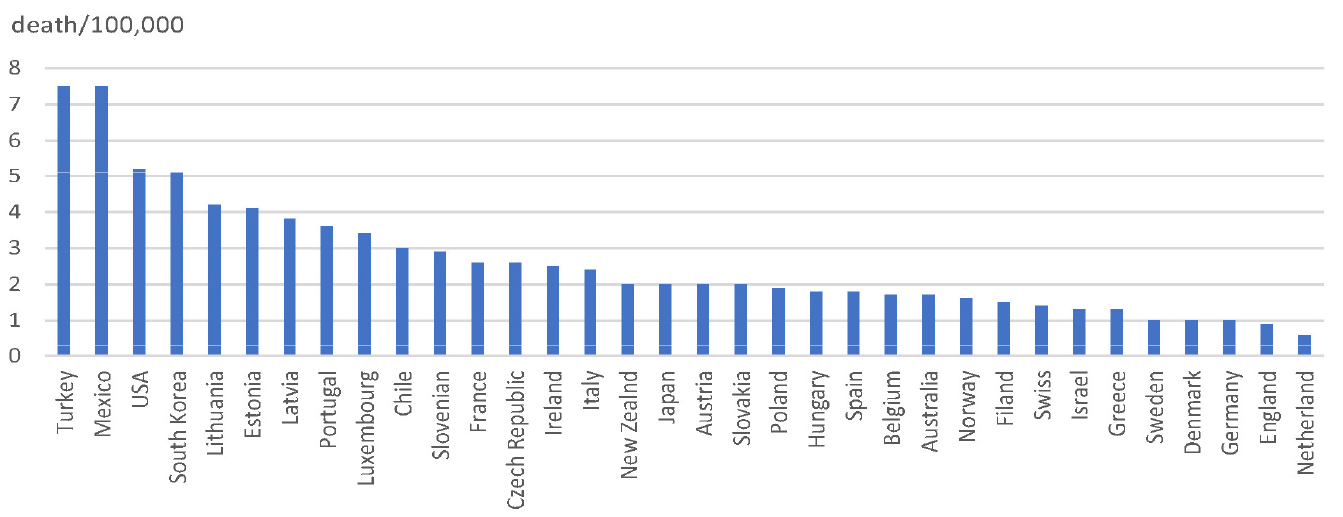
Fig. 1.
Number of Fatal Accidents per 100,000 workers
*Source: ILO, 2018 (http://ilostat.ilo.org)
**The number of deaths due to COVID19 may exaggerate the purpose of this paper, therefore, the study was conducted based on 2018 statistics.
Moreover, among safety incident victims, such children under the age of 14 accounted for 64.4% of the total, elderly over 65 years old were twice the average of any other age group, and disabled people figured five times higher than non-disabled people. The mortality rate of the vulnerable population is the highest among all OECD countries3). The decrease in the number of deaths in child safety accidents from 2,521 in 1996 to 253 in 2018 demonstrates that the speed limits enforced near schools and the stop signs before right hand turns, which have been steadily strengthened over the past few years, have had a posotive impact. Disasters in Korea are characterized by the realization of sufficiently preventable tragedies; although there are systematized disaster management guidelines in principle, they may not be applied and executed to effect in real situations. Numerous factors such as growth-first mentality, insensitivity to safety, non-transparent bureaucracy, and entrenched power-mongering politics have all been attributed as reasons for failure, yet they are unable to overcome them. Research on disaster management and administration, which are largely subcategorized into government crisis management and disaster response, medical emergency system, and compensation/reparation policy– each achieving varying degrees of results– but the sociological research has yielded insufficient results. In an environment where the demographics of victims of social disasters are still unequal and past disasters are repeated, it is necessary to form a national discourse on disasters and elevate the social common sense on safety. The Itaewon disaster occurred on October 29, not too long since the 2014 Sewol Ferry Disaster, and the lessons, academic and social reflections, and warnings learned from the latter still linger not forgotten. Above all, the attitude and responsibility of the survivors toward the victims of the disaster is emphasized. It is necessary to systematically analyze the modules and protocols of disaster management centered on victims, understanding that strengthened systems and effective implementation can reduce the extent of disasters and the scale of victims.
2. Purpose of the Study and Methodology
Geography emphasizes the organic solidarity of local communities in the ‘New Urbanism’ paradigm, and researches disaster inequalities with focus on environmental justice. The core of ‘New Urbanism’paradigm is the comtinuity of the community and the preservation of identity. An important foundation that must be built for this is resilience. This is because sharing, cooperation, and undertanding of the community, especially for disasters, act as the most poserful factors for restoring from temporary shocking experiences. Characteristics of the regions and their relevance to specific types of disasters are studied and diagnosed, and ultimately it prepares and plans organizations to effectively respond to various predicted disasters. In addition, we analyze the principles and operations of business performance that can respond to disaster situations, and cooperate in establishing guidelines for education and training.
The post-disaster response and participation of the victims mainly overlooked the social approach, emphasizing instead on the passive subjects rather than the interest in subjectivity, and trauma-focused medical treatments. Disasters were diagnosed based on their type, the number of casualties, and the scale of economic damage. When considering the aftermath of various disasters that have occurred in Korea, the response towards the victims and their families and close friends was disproportionately lighter in contrast to the extent and scale of the disaster. After the Sewol ferry disaster, similar type of confusion and disarray was repeated despite the updated and clearer guidelines on duties for those dispatched to the site of complex disasters with mass casualties.
This study discusses a community’s role in overcoming a disaster, focusing on the victims in terms of the keywords ‘disaster and safety’. It aims to define a disaster and its victims, and diagnose the issues in response and responsibility to victims through examples of disasters. In addition, the study focuses on the activities of related organizations for victim management centered on human rights and identifies their implications.
Past disasters and victims are researched and analyzed to better understand the disaster management of institutions. A module was set for supporting victims by analyzing various reports and guidelines dealing with the rights of disaster victims. FEMA’s policy updated in the wake of the 9/11 attacks in New York, the Inter-Agency Standing Committee’s site utilization checklist based on lessons learned from Hurricane Katrina and the East Japan earthquake, and the Victims Act based on the experiences of air and vessel accidents in the UK and elsewhere, and finally the principles of victim support presented by the Joint Field Operation are all reference cases of currently implemented disaster management that are analyzed to propose a victim-centric Korean disaster management plan.
3. Disaster Management based on Victim’s Rights
1) Understanding of Disasters and Victims
Disasters are defined in various ways, reflecting the characteristics and social environment of the country.The UN International Strategy for Disaster Reduction (UNISDR) and the UN Development Program (UNDP) define ‘sudden, large-scale events’ that disrupt the basic organization and normal functioning of communities that affected communities cannot overcome without outside help. Disaster is defined as ‘a single event or series of events which cannot be dealt with by normal capacity and cause harm to life, property, social infrastructure and means of subsistence beyond normal capacity’. An important feature of the definition proposed by the United Nations is that the target of disaster damage is not the individual but the local community. It emphasizes that the effects of disasters go beyond individuals and affect communities, and can cause widespread destruction of life, property, and the environment. In fact, unlike individuals experiencing unexpected and uncontrollable shocking events, disasters are complex traumatic events that cause mass amounts to experience fear and threats to life, including physical damage as well as loss of community and neighbors that surround one person. It causes psychological and mental damage such as loss of connection, separation, and isolation from others.
According to the ‘Framework Act on Disaster and Safety Management’ in Korea, disasters are classified into natural disasters and social disasters according to their causes. Natural disasters are defined as disasters caused by natural phenomena, including the fall and collision of natural space objects, such as typhoons, floods, heavy rain and strong winds, wind waves, tidal waves, heavy snowfall, lightning, drought, earthquakes, yellow dust, volcanic activity, and meteoroids. Social disasters include fire, collapse, explosion, traffic accidents including aviation and ship accidents, chemical, biological and radiological accidents, and environmental pollution accidents that exceed the scale prescribed by the Presidential Decree, and national infrastructure such as energy, communication, transportation, finance, medical care, and water supply. This includ es paralysis of the system, spread of infectious diseases and livestock infectious diseases referred to in the Infectious Disease Prevention and Control Act. Article 3 of the Framework Act on Disaster and Safety Management simply defines a disaster as ‘something that causes or may cause damage to the lives, bodies, and properties of citizens and the country.’ Disasters are also subdivided as domestic disasters and overseas disasters according to the location of occurrence, and are sometimes specified as national-level management depending on the scale. In the Korean field work guidelines for complex disasters with multiple casualties prepared jointly by related ministries, forest fires, large-scale subway accidents, large-scale high-speed rail accidents, large-scale fires in multi-dense facilities, marine vessel accidents, large-scale human accidents at workplaces, and multi-purpose building collapses and large-scale accidents constitute as social disasters, and storms and flood damage and earthquake as natural disasters. New guidelines for on-site work were produced post-Sewol Ferry Disaster, but due to the lack of solidarity with the local community, it is difficult to determine how much practical support is given to the victims and their families.
FEMA defines a disaster as an event that causes damage to people and property that cannot be dealt with by the normal management procedures or resources of the government, usually occurring suddenly, but requiring immediate and coordinated efforts by multiple government agencies and the private sector in response. Various terms to describe a disaster in Korea are classified by type, the lack of a clear concept of the phenomena and the coping methods creates an unnecessary need for a new manual to be prepared whenever a new type of disaster occurs, thus its current figure exceeds 1,500 editions. FEMA in the United States, though tersely defined, has a clear concept of its federal government’s National Disaster Response Framework (NRF), National Disaster Preparedness Goal (NPG), and Incident Command System (ICS) that are established and managed according to disaster preparedness, integrated disaster response operation (EOC), and standard response procedure (SOP) according to the risk assessment of local governments.
Natural disasters and social disasters show different psychological outcomes depending on the various experiences of victims. In general, experiences caused by social disasters cause greater psychological pain than natural disasters and are more likely to develop psychiatric symptoms (Nandi and Vlahov, 2005). Due to the inherent nature of disasters in Korea, the number of victims and casualties due to social disasters is greater than that of natural disasters. The scale of casualties due to natural disasters has decreased as disaster policies were established in the 1960’s, while social disasters have resulted in more than 2,000 casualties since 1990 (Kim, 2014).
Disasters that occurred in the new millennium such as fires, road accidents, plane crashes, and ship sinkings are largely attributed to insolvency, overloading, insufficiency, and violations of regulations. The fact that these are repetition of past disasters further emphasizes the gravity of the problem, and the futility fuels the mourning of the bereaved families to even greater effect. Chaos and confusion ensue when families and friends of the victims– the killed, injured, and missing– gather at the scene of the accident. After the Sewol Ferry Disaster, as the importance of on-site response and human rights issues emerged, manuals for on-site management were disseminated. However, the application of the manual to victims in the field is still substandard (Table 1). Disasters in Korea are divided into before and after the Sewol ferry disaster. For accidents with large-scale casualties, the term “accident” or “incident” was discarded in favor of the term “Disaster” used as a proper noun (Yu, 2018). This is to remove any subjective viewpoints and definitions of meaning can be premised to describe the Sewol Ferry Disaster, and any other term fails to properly demonstrate its magnitude of loss and tragedy After experiencing the Sewol ferry disaster, research on disaster politics was conducted. Disaster politics is politics in which various action groups recognize and seek facts post-disaster, assign tasks, measure punitive actions, and prevent recurrence (Yu, 2018). Just as the main target of politics is the public, the key target in disaster politics is the victim and everyone who experienced it together. Approaching disaster as politics is to accommodate the public openness when local relevance transforms to a national shockwave, and from everyday life to a mass-scale social movement and resistance. The concept of communal mourning is likewise derived. Aspects of social alienation and exclusion are highly correlated with disasters, thus potentially obscuring the response and responsibility for victims in disaster relief. Mourning and commemoration originate from a sense of social kinship and community solidarity. The memorial space serves as a place where citizens and those who see it can form anger, fear, and a shared sense of identification with the victim, and forms a social and political influence (Koo, 2017; Jung, 2016). In particular, condolences and memorials contribute greatly to the sense of place. Sites where the mass can gather, such as a symbolic urban epicenter, a place with a large floating population, or a beach nearby from a site of capsizing, encourages an opportunity to voluntarily participate in mourning and commemoration. Citizens' condolences and memorials accelerate their spread and dissemination through the media and also affect political competition.
Table 1.
Social Disaster Occurrences (2009-2019)
| Type of Disaster | number | Vitim(person) |
Economic damage (billion won) | |||
| total | death | injury | missing | |||
| 94 | 2,508 | 917 | 1,524 | 67 | 28,076.58 | |
| Forest fires | 12 | 145 | 11 | 134 | 582.9 | |
| Hazardous chemical spills | 2 | 5 | 5 | 604 | ||
| Lage scale marine pollution | 3 | 7.83 | ||||
| Large scale of Subway | 1 | 477 | 477 | 28 | ||
| Large scale railroad accident | 5 | 24 | 4 | 20 | 198 | |
| Multi dense facility fire | 25 | 657 | 155 | 502 | 2,154.68 | |
| Marine vessel accident | 13 | 640 | 386 | 187 | 67 | 7.9 |
| Large scale human accident at the workplace | 6 | 110 | 30 | 80 | 0.65 | |
| Multi dense building collapse | 4 | 129 | 13 | 116 | 5.78 | |
| livestock disease | 12 | 22,026.84 | ||||
| Infectious diseases | 3 | 308 | 308 | |||
| Stampede (1029 Tragedy)** | 259 | 156 | 103 | |||
2) Support at the Ground Zero of Disaster and Victim Rights
The observatory and predictive technology for natural disaster has developed and attributed to the success in reducing the degree of damage, but it is still a force majeure phenomenon. Depending on the ability to manage society through quick judgment and response and cooperation between regions and related organizations, the grasping the ripple effect can be achieved to some extent. On the other hand, social disasters can be effectively reduced in damage and recurrence depending on the disaster prevention structure, civic awareness, and government capabilities. The Korean public is well familiar with disasters and casualties in recent history such as the following: the Asiana Airlines plane crash in 1993, West Sea Ferry sinking, Seongsu Bridge collapse in 1994, Daegu gas explosion in 1995, Sampoong department store collapse, Korean Air crash in 1997, Daegu subway fire in 2003, and Sewol Ferry sinking in 2014. Despite the harrowing memories and warnings of disasters past, the people who gathered to participate in the Halloween party on October 29, 2022 were inexplicably sacrificed. Debates and controversy endured a couple months, but proper handling and responsibilities were not carried out. Citizens gathered at the site helped support and deal with the victims on their own, and the bereaved families of the victims had to create a memorial space for themselves.
The state has an obligation to protect the lives and safety of its citizens from disasters. In accordance with Article 34, Paragraph 6 of the Constitution, Article 4 of the Disaster and Safety Act stipulates the state's responsibilities as efforts to prevent accidents and damage reduction, and to establish and implement plans for prompt response and recovery from accidents. In addition, Article 2 stipulates as a basic ideology that all citizens, the state, and local governments should first consider the safety of people's lives and bodies. Korea, the United States, Nordic developed countries, and Japan adhere to the disaster management cycle model of ‘readiness, preparedness, response, and restoration’. This signifies that during normal times, readiness and preparedness are prudently emphasized, while in the event of a disaster, a swift and urgent response must be achieved and followed by restoration efforts. Japan even adds the concept of ‘dream’ prevention of disaster, which implies that its effects lead to a great renaissance after restoration, and emphasizes that this can be completed by the local community forming a module of New Urbanism. The purpose of disaster management is to manage various risk factors in advance and, in particular, to minimize damage to life and property after a disaster occurs. One of the most underscored aftermath of the Sewol tragedy was the support– or lack thereof– for victims at the site after the disaster. Evidence of negligence and mismanagement was displayed by the lack shelter for family and friends who gathered at the scene, various rumors swirling from indiscriminate coverage and tabloid photos, the inhumane method of transporting the corpse of victims, and overall confusion that surrounded the victims' families whose status changes over time (missing people to the families of the injured, from the missing to the families of the dead, etc.).
Article 37 of the Disaster Safety Act stipulates that the regional head controller of the disaster site, the mayor, and other appointed and elected leaders of the district must take emergency measures in accordance with relevant laws and crisis management manuals immediately after a disaster occurs. In addition, on-site command matters for taking urgent measures such as rescue and first aid at the site are stipulated in Articles 49-57 of the same law. Emergency rescue groups are organized by the local and regional fire departments and police agencies. In addition, measures to support victims and affected areas for disaster management are specified in detail in Articles 60-66 of the Disaster Safety Act. The content of the article declares that the relevant government department must provide tax cuts, shelter and medical care, legal support, industrial accident compensations and other insurance benefits, and a compensation system. Local governments must install and operate funeral cost subsidies, joint memorial space, and incense burners traditional to Korean customs. After the controversial response to the Sewol disaster, which seemed to focus on adhering to the elements of the manual rather than to prioritize to fundamental problem-solving, these doubts and concerns were confirmed once again by the response to the recent 10.29. Itaewon Disaster. It is urgent to change the effective on-site management by giving priority to the rights of victims based on their needs and characteristics, taking into account the perspective of supporting victims as relief targets after a disaster.
3) A Paradigm Shift in Victim Care at Disaster
Countries around the world have improved disaster management systems based on experiences, and have updated essential legal structures and systems for practical implementation accordingly. In the United States since the early 19th century, disaster management and guidelines have been constantly shaped and reshaped accordingly in response to major disasters experienced such as hurricanes that occur between April and October, winter storms such as the Nor'Easter in the Northeast, various natural disasters such as mountain fires, as well as the 9/11 terrorist attack, the Boston Marathon terrorist attack in the 21st century, and the recent COVID-19 outbreak. In response, the United States has been comprehensively evaluating and establishing new systems and organizations, and reorganizing laws accordingly, and thereby demonstrating their leadership as an advanced nation in research on disaster management and support for the international community. The United States steadily developed her paradigm of disaster management in the process of responding to disasters, and in particular, after the failure to respond to Hurricane Katrina in 2005, extensive debates were made about the function of response and recovery. The increase in non-profit organizations that support specific constituents and the increased interest in these non-profit organizations that want to take on greater responsibility for disaster response have led to the realization of disaster politics. The federal government has made efforts to embody the functions of disaster management, particularly in holistic planning for disasters and disaster governance. The ‘Post-Katrina Emergency Management Reform Act’ is an example of a change in the federal government’s disaster management method (Haddow et al., 2020). In 2008, the Obama administration appointed Craig Fugate, a talented disaster management administrator from Florida, as FEMA Commissioner. Focused on disaster preparedness and response through cooperation with the Department of Homeland Security and increasing disaster management capabilities, Commissioner Fugate introduced a “holistic community” structure with a concept that shifted the focus from victims to survivors, and navigated through massive floodings, Tornado Joplin, Tornadoes in Missouri, Hurricane Sandy, and the Boston Marathon bombings during this tenure. As such, the starting point of disaster management is the role of the government. The US Constitution specifies the responsibility of the state for public health and safety, and also stipulates responsibility for public danger as the role of the federal government. It is the role of the federal government to support the input of manpower and capital and manage the site to solve the situation when local governments or individuals face chaotic situations due to disasters. This fundamental philosophy has been the pillar that has guided the government's function in disaster management.
The most important change is that the management of disaster types and situations is being thoroughly converted to disaster experiences. In 1916, Brookings, a progressive public policy research and analysis government research institute centered on the US Democratic Party, began its non-profit activities in public policy by contributing to the formation of the United Nations, bailout relief, welfare reform, and design of foreign aid programs. It presented innovative and practical guidelines aimed at solidifying democracy, creating economic and social welfare, stabilizing communities and local societies, and creating equal opportunities. In 2006, the Inter Agency Standing Committee (IASC) adopted operational guidelines on human rights and natural disasters, and this served as the basis for the development of guidelines on special measures to protect individuals in these circumstances (www.brookings.edu; www.interagencystandingcommittee.org). IASC's guidance is rights-based and has contributed to the facilitation of legal management functions, particularly in the context of natural disasters. The IASC is responsible for the management of security-deficient environments, threats to gender-access, unequal provision of services and discrimination, child abuse or exploitation and neglect, family separation and living alone for the vulnerable, personal loss, and legal blind spots, and suggests the principle of legislating the management of the unsafe and vulnerable social environment from a humanitarian perspective. IASC's guidelines are divided into four main groups– structuring policies and laws for individuals and families, food and health and hygiene, poverty and education, and human rights. This marked the beginning of ensuring that disaster relief and recovery activities protect and promote the human rights of people affected by disasters.
In celebration of the 10th anniversary of the revision of internal guidelines in 2008, the Brookings Institute analyzed and supplemented its experience in human rights protection. In particular, it drew international attention by specifying that the promotion of human rights in countries such as Somalia, Congo, and Colombia was the most urgent task, emphasizing issues such as family separation and becoming refugees in discriminatory issues in local communities caused by conflict. Through the IASC, the Bern Project on Internal Displacement (2011) was published and the IASC framework for durable solutions for internally displaced persons was created. It aims to establish a system for the protection of displaced persons in the country and the preparation and dissemination of guidebooks for law and policy makers, and to provide specific guidelines for translation into national laws and policies, supporting the practice of relevant authorities. However, if the country's legal structure itself is not sufficient to guarantee the rights of IDP (Project on Internal Displacement), it serves as a practical tool of guidelines, such as having an expert spokesperson hold the country responsible and probe later. In this process, those directly involved in the disaster, which were originally collectively referred to as victims, are interpreted more broadly as ‘persons affected by the disaster or persons experienced by the disaster, including missing persons, survivors including victims, and people who experienced the disaster together with the personnel involved’ which now can be subcategorized as psychological and economic applicants.
Korea’s Yellow Ribbon Human Rights Group was formed in 2017 to understand the Sewol Ferry Disaster from a human rights perspective and provide support. After analyzing fires, marine ship accidents, and aircraft crashes for two years, and considering the state’s responsibility role in fact-findings, it subsequently published “The Rights of Disaster Victims (2019).” One notable aspect is the term ‘victims’ rights’. It explains what a disaster is, who the victims are, and what rights they have. Its approach begins with empathizing with the miseries and tragedies engendered by a disaster, raising awareness and uncovering social problems and absurdities that arise from these unavoidable catastrophes. Human dignity is violated without recognizing one’s rights in the event of loss of life, loss of a loved one, or in an extremely confusing situation. Damage caused in the process of rescue and volunteer work is ignored because it is not a direct disaster situation, and at times survivors are riddled with guilt to those that perished to the victim’s family. Demands for truth-finding and punishment for those responsible are narrowed down to compensation, and voices claiming rights are suspected or misunderstood as a factor in political disputes, resulting in further harm. The people who experienced disaster were analyzed in various aspects, and the types of damage and victims were more specifically illuminated. Emphasizing that the key principles of human rights are universality and mutual incompatibility, a shift in the perspective of support for victims was suggested (Table 2).
Table 2.
Shift in Support Perspective
The UK’s Crown Prosecution Service constructed the ‘Victims of Crime’ (the code of practice) and stipulated the minimum level of service that victims could receive from organizations that signed it (2006). This code amended the Victims Act in 2013 to properly reflect the EU's Victims Directive, and added systems for victims of serious crimes, vulnerable victims, and victims who are constantly exposed to risk. As it was officially implemented into national laws and systems from 2015, the definition of victim included a natural person who suffered physical, mental and economic losses directly caused by a criminal act, and a relative of a victim of a crime (spouse, partner, family member, legal guardian).
Field response according to the core principles performed by FEMA's Joint Field Office largely consists of two parts of the standard operating procedure (2006): the field management personnel (local officials and heads of state and government, fire and police, volunteer groups, medical support personnel, and journalists) and service components. Operations in the field management process are comprised of site installation and planning, construction (field setting, meeting place and communication method, site control method and manpower management), emergency stage, response stage, and medical welfare coordination stage after site termination. Again, what is emphasized at JFO is respect for human rights, and regular training and education are conducted to provide fairness, impartiality and justice equity services to all victims according to these field rules. Victim assistance work practices are recorded and archived in real time on personnel and activities in the field to ensure efficient, impartial and accountable assistance. Based on the principle of participation and communication, a pool of community participants (volunteers who understand the local environment well, medical volunteers, communication experts, etc.) is built to educate them and establish a system that can be flexibly put into the field. In addition, the entire sequence of the disaster is reported transparently to the involved disaster-experiencers (victims and their families and friends, guardians) for ultimate decisions to be made. Blueprints and site sketches are mapped for integrated support and enhanced focus on the safest and most efficient site management.
4. Discussion and Conclusion
Efforts to prepare for disasters that affect countries, communities, and individuals and to achieve desirable responses have developed along with the evolution of mankind and these are evidenced in various moments in history. Disasters are remembered and predicted as far back as the hieroglyphics and the Biblical prophecies regarding apocalyptical interventions that are to come down upon civilized society. Moses’ parting of the Red Sea is also interpreted as the first attempt to control the tide. Individuals and local communities have made every effort to overcome disasters throughout human history, but systematic attempts to recover from disasters have only begun institutionalized and practiced in modern society.
It can be said that large incidents and leadership have brought more dramatic changes to disaster management in Korea in recent years. Experiences from numerous fatal disasters in the 20th century that include a department store and bridge collapses, subway fire accident, prompted a new attitude toward facility management and disaster prevention and preparedness. It can be said that progress has been made to a degree. However, the 2014 Sewol Ferry Disaster and the 1029 Itaewon Disaster served as major benchmarks that brought about massive calls for change and reform. Above all, as we discuss disaster management that prioritizes victim support and victims’ rights at the disaster site, we should focus on improving disaster management through victim-centered on-site management and operation from a humanitarian perspective.
Although new guidelines are being written to systematically improve the capabilities to prevent and prepare for disasters, many factors including response capacity, recovery performance, and institutional guidelines centering on victims at disaster sites are still considered inadequate, and on-site guidelines for the support personnel activities are likewise ambiguous. It can be said that the validity of disaster management as the role of the government remains questionable. Efforts to overcome disasters were made at the levels of individuals and local communities long before the government took the lead in managing disasters. The government’s role in disaster management has continued to expand as large-scale disasters have occurred at multiple levels, changing political philosophies and developing countries. In the wake of a disaster, the political competition between various administrators and officials ‘after that’ is defined as disaster politics. Although many advocate for human rights of victims being placed at the center of disaster management, most of the existing disaster studies on disaster victims have focused on the traumatic experiences of disaster victims. Passivity is emphasized over subjectivity, and medical treatment is emphasized over sociopolitical approaches.
Research and support from non-profit organizations– including the United Nations– that seek to take greater responsibility for disaster response aims to establish guidelines for on-site management that puts human rights first and is victim-oriented. These efforts have been encouraging measures that have simultaneously kept politically-driven governmental initiatives in check. Looking at the results of the studies conducted so far, most of the disaster victims experienced ‘Post-Traumatic Stress Disorder (PTSD)’ after experiencing the disaster in terms of psychological and psychological aspects. Anxiety and depression levels increased, while living satisfaction and well-being levels decreased. In particular, social disasters were found to have a very serious level of ‘complicated grief syndrome’, a state in which psychological pain and post-traumatic stress symptoms have become chronic after shocking bereavement even after time has elapsed, compared to victims who have experienced natural disasters.
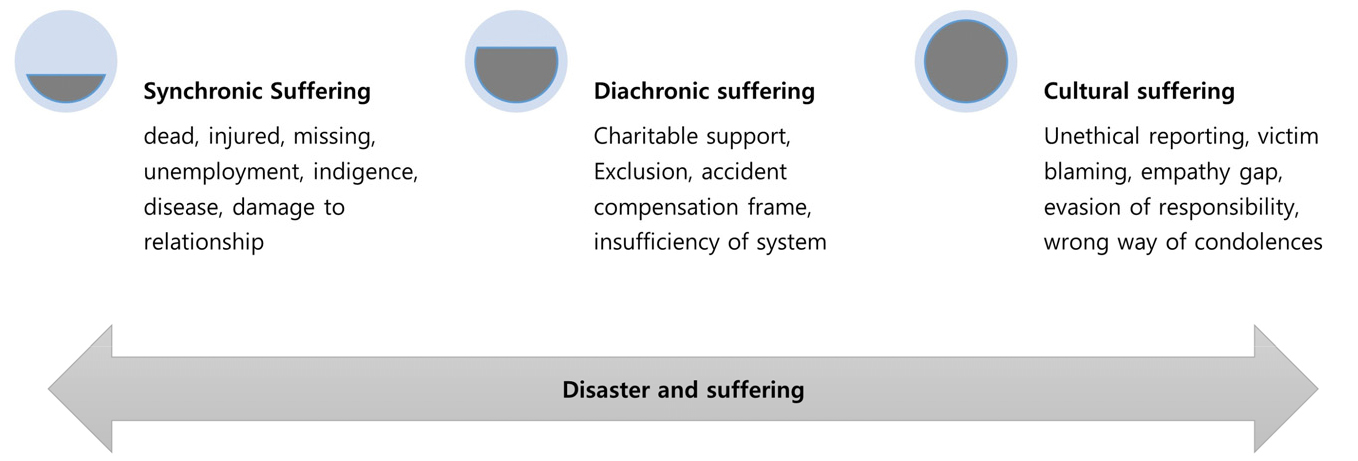
The lack of transparent fact-findings of the Sewol Ferry Disaster, coupled with the fact a tragedy recurred less than 10 years with similar issues, indicate that our attitude and ability to respond to disasters have not significantly improved. Clear guidelines on how to accept disasters and their consequences should be newly reminded in Korean society, and be kept up to par with the reforms of disaster response by world organizations such as the United Nations and countries. The on-site victim management and continuing services to victims after a disaster is of the utmost importance. Through examples of the development of various disaster responses and paradigm shifts, four important guidelines for Korean disasters should become lucid. First, the identities of all persons involved in the disaster must be identified at the site, and must be promptly informed to related persons such as family members, relatives, friends, and guardians. In addition, all field participants must correctly recognize the damage and suffering to the victims (Fig. 2). Death, injury, and disappearance caused by the incident itself are directly related to economic and physical damage as well as human casualties, and it exposes the risk of continuing as serial synchronical damage such as unemployment, poverty, and disease. If charitable efforts are enforced to cover up the system’s inadequacies, fragmentary system improvements, and irresponsible public officials’ work attitudes, victims instead become objects of shame rather than receiving protection and having their rights ensured. Cultural harm, such as miscirculation of information, criticism of victims, and unethical gossip, in which danger is regarded as completely irrelevant to the victim, also causes secondary pain to the victim. Accordingly, empathy for disaster damage and suffering must be enlightened to those who participate in disaster response and to citizens.
Second, a participation group of volunteers, medical staff, and psychologists centering on the community should be assembled. Volunteers and all participants in victim support must be professionally trained in order to aptly handle real situations through continuous education and training. In particular, it is possible to maintain the critical golden time and respond quickly and efficiently if these volunteers have particular knowledge of the locale or region and are utilized for their strengths appropriately. In disaster-prone regions, professional participants from the local community in each field can habitually and instinctively navigate through the distribution and attributes of evacuation routes, bypass roads, and the socially underprivileged based on their understanding of the local structure, which will support effective firefighting and police activities.
Third is the setting of the field map. Components such as the rescued victims’ waiting area and hospital transfer, moving and funeral procedures for the dead, waiting area for victims’ families and related persons, emergency vehicle stop, access prohibition sign and mark to identify authorized reporters and volunteers (wearing badges or vests that can be judged) etc.) and control of unconfirmed access, securing traffic routes for vehicles, transparent disclosure and recording of real-time information through the installation of electronic signboards, meeting space and time plans to discuss with victims’ families must all be urgently established. In addition, crackdowns and punishments for indiscriminate reporting and unauthorized photo taking should work in accordance. A record of the turnover of the watchman and a sketch of the on-site situation must be archived in great detail from the time of the disaster to the end of the on-site situation.
Above all, a prudent approach and responsible role of the government, local governmental officials, and disaster-related public officials are emphasized. Human rights should be a principle of disaster management (Fig. 3). In order to prevent the same type of disaster from recurring, it is necessary to familiarize oneself with field manuals through institutional improvement and continuous education and training. In addition, disasters in large cities on Metropolitan Area have a much greater degree of economic and human damage. In the case of disasters centered on big cities, especially social disasters, the placeness is very important. Moreover, the steepness as a place remembered after disaster management and recovery is significant. It is often a particularty socially noted and meaningful place as the big cities that have experienced such as the 911 disaster in New York City and Washington D.C. where Pantagon is located (Uitto, 1998; Maddrell, 2016; Grove, 2014; Furedi, 2007).
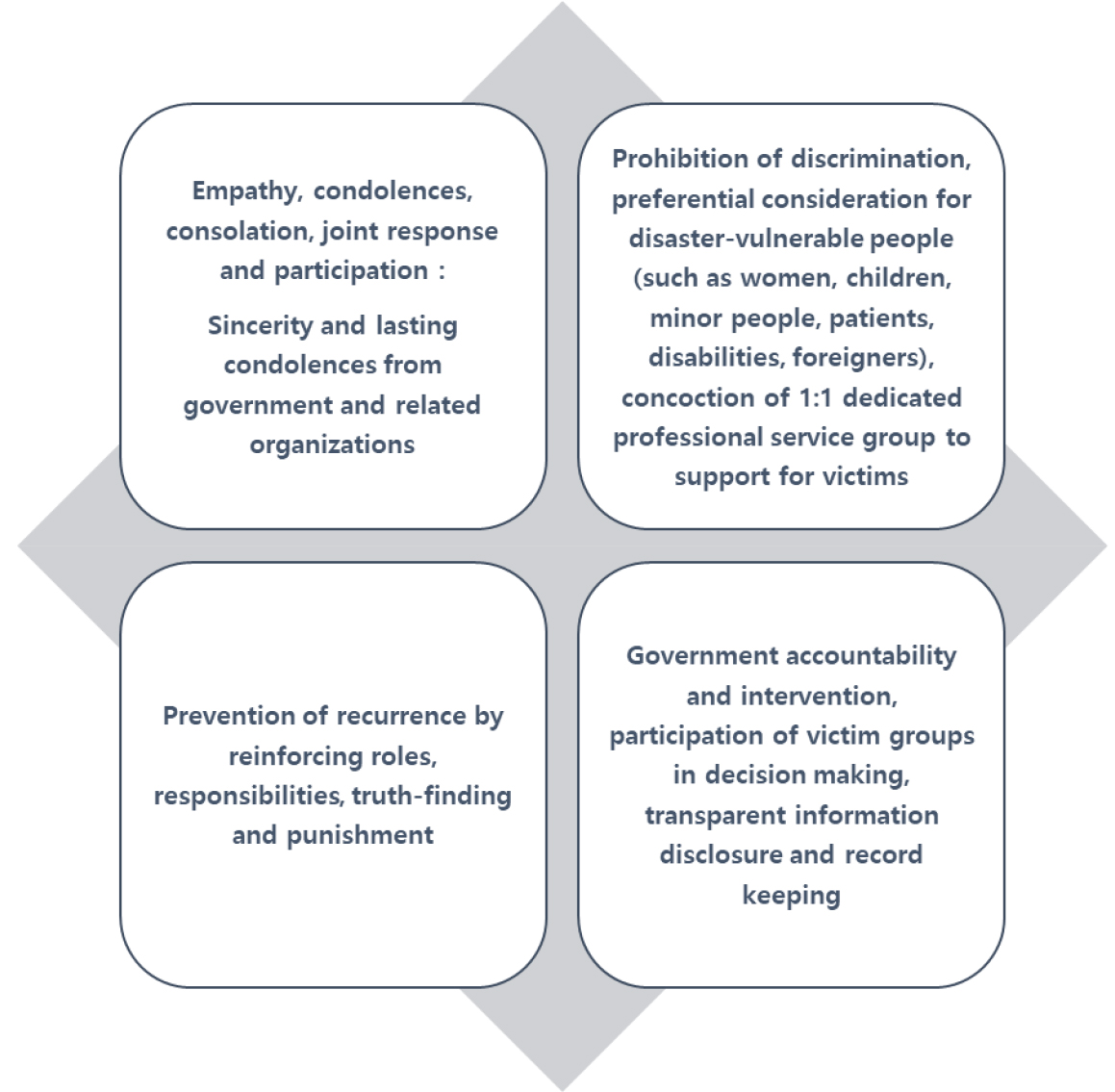
Victims’ rights must be given top priority, and sincere approaches and management tactics must be utilized. In order for disaster victims or victims’ families to gather together to talk about similar experiences and comfort them, a dedicated public affairs group (consisting of police, medical staff, funeral counselors, psychotherapists, etc.) must continuously look after them and heal them physically and mentally. A healthy environment for the aforementioned politics of mourning must be established, ranging from the roles, responsibilities, and punishments carried out by governments and relevant agencies.